
In his 1914 text ‘The Word about Serbia’, Russian writer Leonid Andreev described the Serbs’ attitude towards Russia and the Russian people with these penetrating, heartfelt words: ‘And here is one more thing you should not forget when thinking of Serbia: in Serbia, they love us – with an ardent, sincere, and almost tender love… They will lay their last carpet under your Russian feet, take the last morsel of bread from their hungry lips, and with the divine generosity of the poor, they will give it to you as their dearest guest from beloved Russia. When praying to God, whom do they mention in their prayers before their own children? – Russia… We are loved so little in general and so little respected: “Barbarians!” – Karl Liebknecht shouted at us only recently – “Barbarians, you should be cast out beyond the Urals!” And the more so should we cherish this tender and trusting love: it is the pledge not only of Serbian, but of our own revival.’
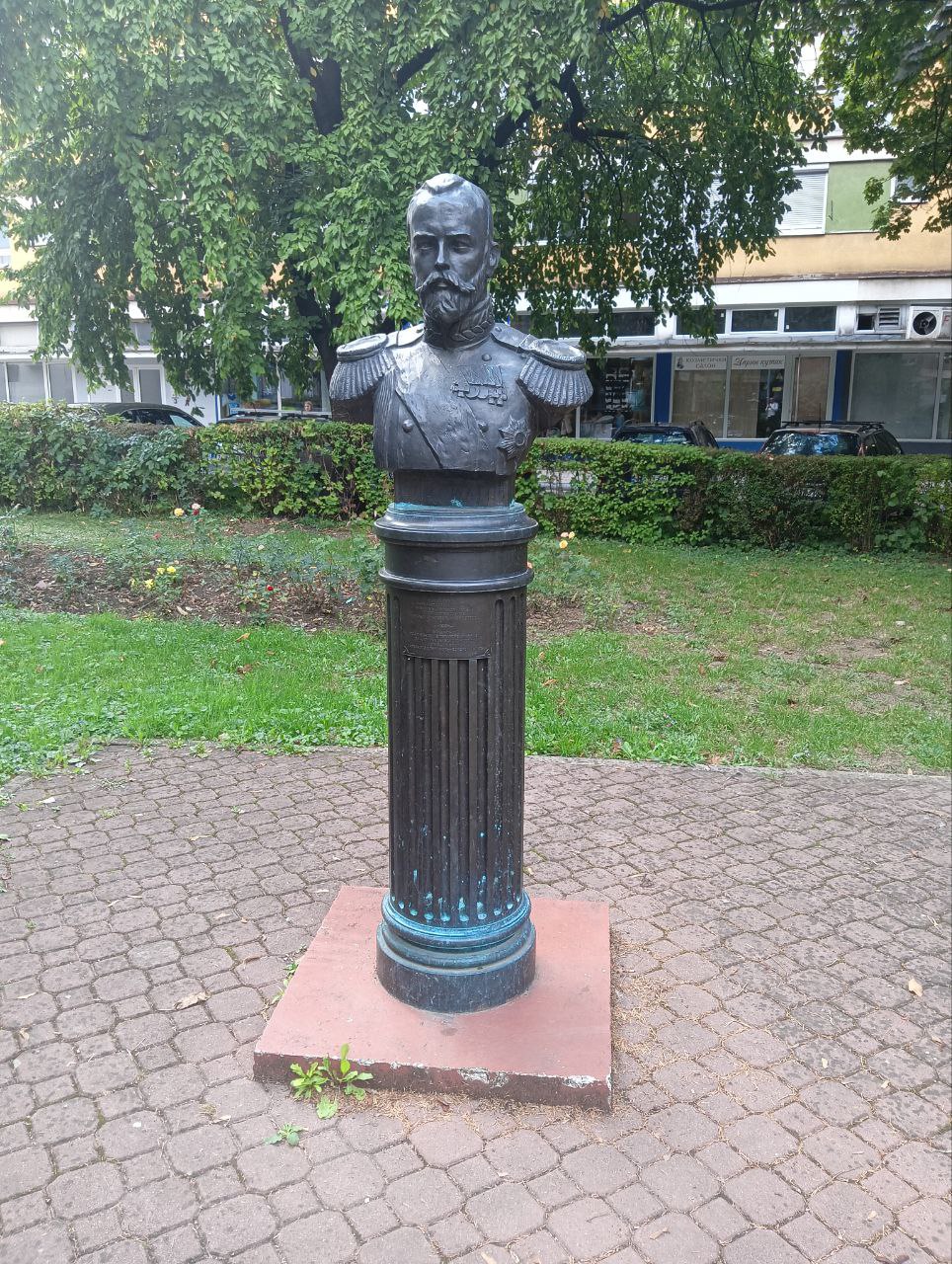
The Serbs’ attitude to Russia is the same as their perception of the most vital themes and values of their national tradition, such as the figure of Saint Sava, the founder of the Serbian Orthodox Church, or the Kosovo Covenant. There is no doubt that Russophilia at the cultural and emotional levels is an almost inseparable part of the Serbian national identity. Reflecting on Russian public diplomacy, Russian presence and influence among the Serbs – including those living in the youngest Serbian “country”, i.e. the autonomous entity within Bosnia and Herzegovina (BiH), the Republika Srpska (RS), established on 9 January, 1992 – we should always remember these attitudes which no other peoples have towards us. The aim of this text is to outline the main manifestations of Russian presence and activity on the territory of the RS, primarily in the intellectual and cultural spheres. However, it should be kept in mind that it is difficult to distinguish spontaneous and unconditioned expressions of affection towards Russia from what is a direct result of the activities of Russian public diplomacy. It can be said that these two elements are intertwined and complement each other.
The presence of Russian people on the territory of today’s RS has never been significant. The Ukrainian community has historically been considerably larger because in the late 19th century, Austria-Hungary settled people from Galicia in parts of today’s RS. Following the October Revolution, only a small portion of the Russian refugees in the Kingdom of Serbs, Croats and Slovenes settled within the territory of BiH. The 1931 census showed that 2,636 Russians were living in BiH, including 485 in the district of Banja Luka, the present-day capital of the RS. As in other Serbian regions, this part of the Russian emigration left a significant legacy; these were educated people who worked as architects, engineers, teachers, medical professionals, military officers, judges, and civil servants. According to the latest census of 2013, only 177 Russians were living in the RS. The new wave of Russian refugees following the start of the “Special Military Operation” has not increased the Russian presence in the RS, unlike in Belgrade and Serbia.
Following the end of the civil war in BiH in 1995, the RS has been under a sort of Western colonial rule, both politically and culturally. Thus, Western influence has been decisive and has sought – and continues to seek – to transform the Serbian national consciousness and, of course, to distance it from and set it against Russia. In this regard, the pro-Western non-governmental media outlets are highly active: they regularly and extensively report on the presence of Russian “soft power” in the RS. In their analysis, every form of Serbian-Russian cooperation and friendship is interpreted through a political lens: as an instrument of political influence and presence of the Russian Federation and, on the other hand, as an attempt by Serbian political elites to implement the ideas of their own “Serbian World”, moulding it on the “Russian World”.
Russian presence and Russian culture in the RS are promoted by a number of organisations, such as the Russian Cultural Centre of the Russkiy Mir Foundation, which opened in Banja Luka in September 2012 as the first institution of this kind in the RS and BiH, and the Association of Serbian–Russian Friendship “Bratstvo” (Brotherhood). Since early 2022, the ‘Romanovs’, a society of Russians in the RS, has been operating within the framework of the Association of National Minorities of the RS. A Representative Office of the Russian Historical Society in the RS has also been launched within the framework of the recently established Institute of Historical Sciences at the University of East Sarajevo. The Foundation for the Support of Christian Culture and Heritage began its work in Banja Luka in November 2024. Before that, this Foundation headquartered in Belgrade launched free Russian language classes in Banja Luka, attended by around 120 people aged between 8 and 65. In addition to these initiatives, there are various non-governmental organisations dedicated to strengthening Serbian-Russian historical and cultural ties. The Russian House (Russkiy Dom) in Belgrade is actively working across the RS to promote Russian culture, commemorate key dates in the history of Russia and Russian–Serbian relations, and popularise education in the Russian Federation among Serbian youth. It is also worth noting that the RT Balkan channel began broadcasting in Serbian in Serbia and the RS in late 2024.
As for the University of Banja Luka, the only organisation whose activities are related to Russia and Russian culture here is the Centre for Russian Studies established in 2021 within the Faculty of Philology. The primary aim and objective of the Centre is the systematic study of Russia, the Russian language, literature, history, culture, Russian society, and contemporary Russian politics, as well as the development of a scholarly and academic foundation for acquainting students and the general public with modern Russia. The Centre cooperates with the Russian Federation and its representatives in BiH and Serbia. The study of the Russian language and culture in the higher education institutions of Banja Luka dates back over seven decades, while the specialized Study Programme for Russian and Serbian Language and Literature at the Faculty of Philology was established in 2012. In its early years, this programme attracted significant attention among applicants, with the number of enrolled students ranging from 40 to 50, which represented the maximum admission quota. However, in the last few years, the number of students enrolled in the programme has significantly declined. For example, in the 2022/23 academic year, there were only nine of them. This trend is not only a reflection of the general demographic crisis and the reduction in the number of students in the RS, but also a direct consequence of poor employment prospects in the profession upon graduation. A 2021 survey showed that as many as 63% of former students of this study programme had no work experience in the profession. However, 57% of the respondents said that knowledge of the Russian language had aided their career development, while 50% reported having experience in Russian language tutoring. Russian is also taught at the other state university in the RS – in East Sarajevo – and at one private university. Within the primary and secondary education system of the RS, Russian is taught as a second foreign language, along with German, French, and Italian. Data from 2020 show that 19% of primary school pupils and 8% of secondary school students in the RS studied Russian as a second foreign language. It should be emphasised that the Russian language used to be less common in the capital and the western part of the RS, where it was studied by only slightly more than 5% of primary school pupils and just over 2% of secondary school students. In 2023, Russian was introduced in another 15% of primary schools in the RS, increasing the proportion of students learning it to about 40%.
An inevitable theme of the Serbian–Russian ties and Russian presence in the RS is the shared military history. In the RS, 9 May is a public holiday commemorating the Victory over Fascism. Of particular interest is the live broadcast of the Victory Parade from Red Square on the national television. Soon after the “Immortal Regiment” marches emerged in Russia, this tradition also took root in the RS. Affection for Russia here is also sealed by the memory of several hundred Russian volunteers who fought on the Serbian side during the civil war in BiH; thirty-seven of them lost their lives. Russian Volunteers Remembrance Day is observed annually on 12 April.
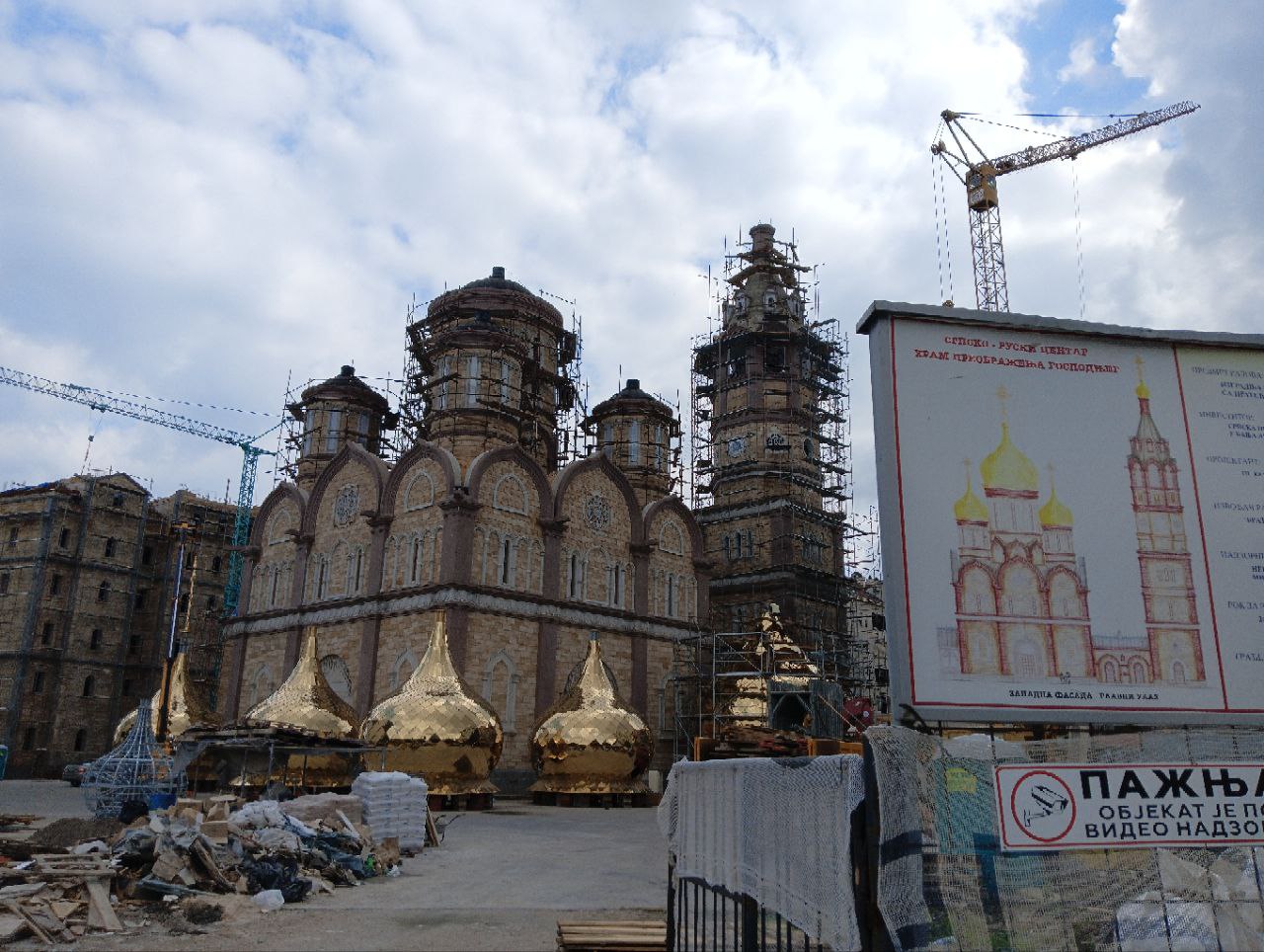
The most evident and beautiful symbol of modern Serbian–Russian rapprochement is the Serbian–Russian Orthodox Church and Cultural Centre, which is currently under construction in Banja Luka; its foundations were consecrated in September 2018. This is a long-standing idea that originated among the Serbian intelligentsia and clergy after World War I: to build a church in honour of the Martyr Tsar Nicholas II and the Romanov family, and in recognition of the support provided by the Russian Tsar to the Serbian people during the war. The building is a replica of the Church of the Miracle of the Archangel Michael constructed in the mid-14th century in the Moscow Kremlin. Another religious building in the RS built in the Russian style is the Ritešić Orthodox Monastery for men, near the city of Doboj. The monastery was founded in 2014 and is dedicated to Saint Matrona of Moscow.
A distinctive paradigm of Russian public diplomacy in the field of science, related to the Serbian and Balkan region, is the annual scientific conference ‘Balkan Dialogue’. For over a decade, it has been held across various Balkan countries and is organised by the Alexander Gorchakov Public Diplomacy Fund. Its aim is to provide a platform for dialogue between experts and young professionals in the fields of international relations, economics, security, and history. The conference was first held in the RS in October 2023 in Banja Luka, and for the second time in 2025, in the south, in the republic’s most beautiful city – Trebinje.
A clear indicator of the attitude towards Russia in the RS is the way current tragic events on the territory of the former Ukraine are perceived. According to a study by the Metrics Consulting agency, when asked who is responsible for the outbreak of the conflict in Ukraine,
44.5% of the respondents in the RS blamed the US and President Biden, 19.6% blamed Ukraine and Volodymyr Zelensky, and only 3.8% said Russia and Vladimir Putin were responsible. About a quarter of the respondents answered that “everyone was to blame”, while 6% either did not know or refused to answer. According to another survey, conducted by the German bne IntelliNews portal, 59% of the respondents in the RS considered the US the main culprit, while 30% blamed Russia and Vladimir Putin. According to the same survey, in the other part of BiH – the Federation of Bosnia and Herzegovina – 79% of the respondents considered Russia to be the main culprit. The German survey, suggesting that 30% of the respondents in the RS blamed Russia, certainly does not reflect the real situation; however, the poll undoubtedly shows the striking difference in perceptions between the Serbs, on the one hand, and the Bosniaks and Croats in BiH, on the other.
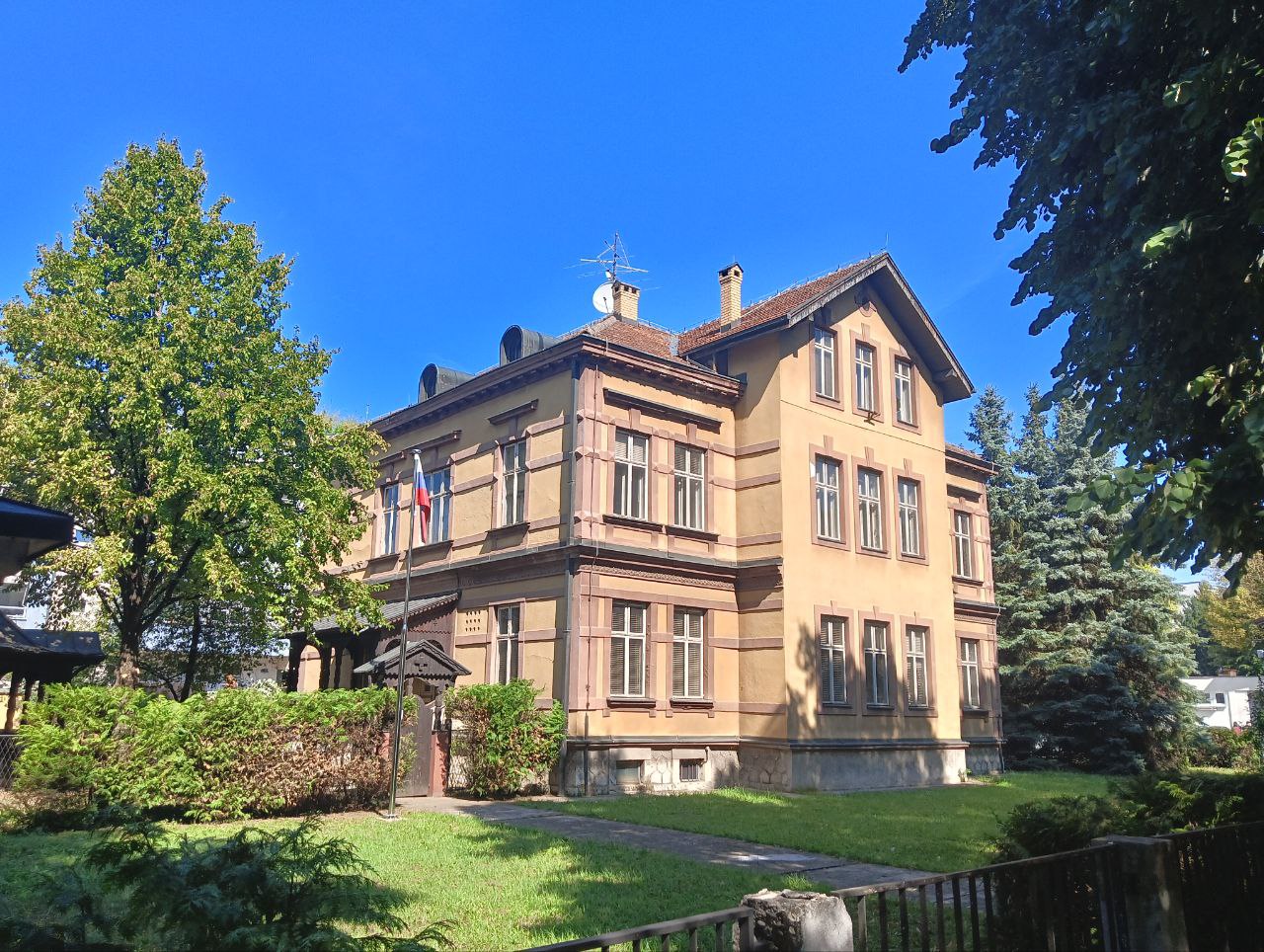
Russia made its presence in the capital of the RS even more visible and significant on 11 June 2024, when the President of the RS, Milorad Dodik, and the Russian Ambassador to BiH, Igor Kalabukhov, opened an office of the Russian Embassy in Banja Luka opposite the RS Government building. Only a year later, Russia dispatched a representative of Rossotrudnichestvo, Alexander Borisov, to BiH; his goal is to promote the comprehensive development of relations between Moscow and Banja Luka in the cultural, scientific, and social spheres – an objective he is already actively pursuing.
Our historical and spiritual experience irrefutably teaches and reminds us that, among the great European and world powers, Russia was and remains the only ally of the Serbian people and the Serbian states in the Balkans. The Serbian people, in turn, truly appreciate this. Such relationships should become the foundation and the prerequisite for successful future cooperation and strengthening of the existing brotherly ties.